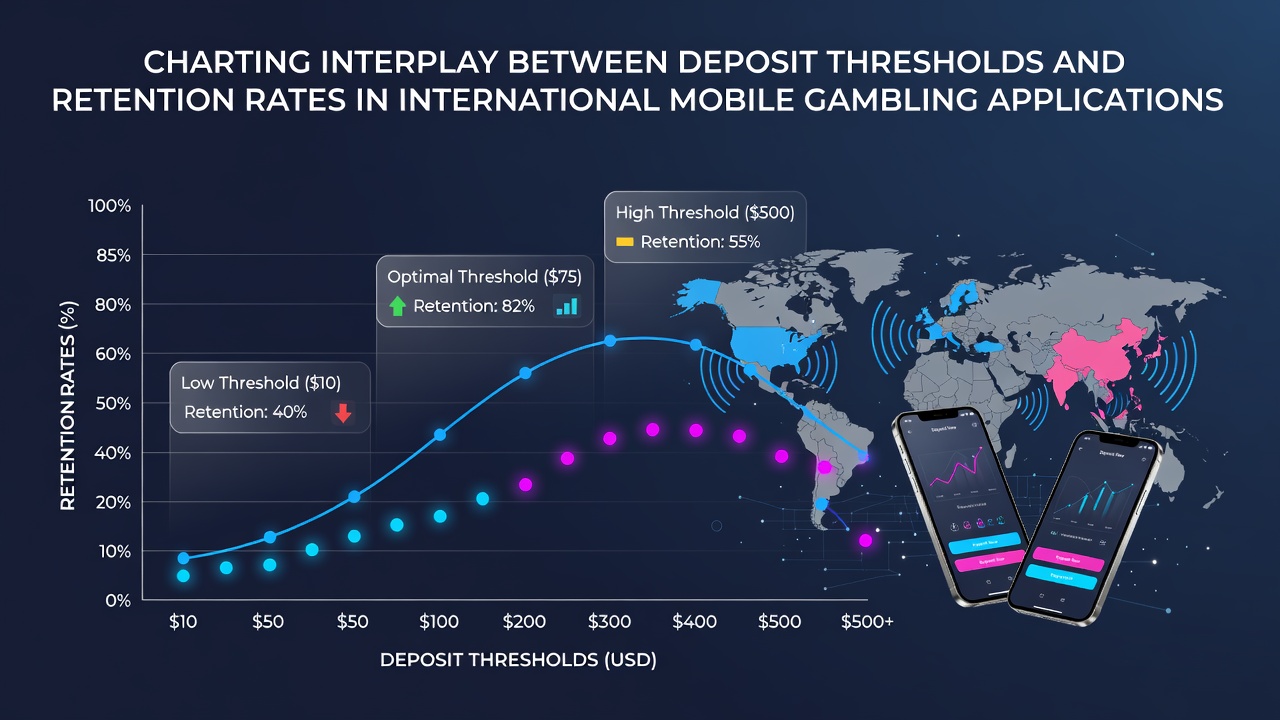
Charting Interplay Between Deposit Thresholds and Retention Rates in International Mobile Gambling Applications
International mobile gambling applications have expanded rapidly in recent years, and operators now track how deposit thresholds interact with player retention rates across diverse regulatory environments. Deposit thresholds refer to the minimum and maximum amounts users can add to their accounts in a single transaction or over a defined period, and these limits vary by jurisdiction while influencing how long players remain active on a given platform.
Defining Deposit Thresholds in Mobile Gambling Contexts
Operators set deposit thresholds to comply with local rules and manage risk exposure, yet the specific values differ significantly between regions such as the European Union member states, Australian states, and Canadian provinces. In many markets minimum deposits range from the equivalent of five to twenty local currency units, whereas maximum single deposits often sit between five hundred and several thousand units depending on verification level and operator policy. Research conducted by the Australian Institute of Family Studies shows that adjustments to these limits correlate with measurable shifts in session frequency and account longevity among mobile users.
Players encounter these thresholds at the point of funding, and systems automatically enforce them through payment gateways integrated into the applications. When thresholds rise, casual participants sometimes reduce activity or migrate to competing platforms that maintain lower entry points, while higher thresholds can concentrate engagement among users who already demonstrate larger average transaction sizes.
Measuring Retention Rates Across Platforms
Retention rates in this sector typically calculate the percentage of users who return to an application within thirty days, sixty days, or ninety days after their initial deposit. Industry analysts collect these figures through anonymized telemetry data that records login patterns, bet volumes, and account funding events. Figures released by iGaming Ontario indicate that average thirty-day retention across regulated mobile gambling apps hovered near forty-two percent during the most recent reporting cycle, with noticeable variation tied to deposit policy settings.
Longer-term metrics extend to six-month and twelve-month windows, revealing how initial threshold experiences shape sustained participation. Applications that permit smaller incremental deposits often record steadier return rates among a broader user base, whereas those enforcing higher minimums show stronger retention within narrower segments that favor larger wagers.
Observed Correlations Between Thresholds and Retention
Multiple datasets illustrate that modest increases in minimum deposit requirements can produce a drop in short-term retention, particularly among new registrants who test the platform with smaller amounts first. Conversely, maximum deposit caps sometimes stabilize retention by preventing rapid account depletion that leads to abrupt exits. Observers note that applications operating in markets with flexible threshold tiers, allowing users to select from several funding bands after identity verification, tend to sustain higher overall retention across demographic groups.
One study released by the Canadian Centre on Substance Use and Addiction examined anonymized records from several provincial operators and found that platforms adjusting thresholds quarterly in response to player cohorts maintained more consistent retention curves through the first half of 2026. The analysis highlighted that gradual threshold scaling, rather than abrupt changes, minimized migration to unregulated alternatives.
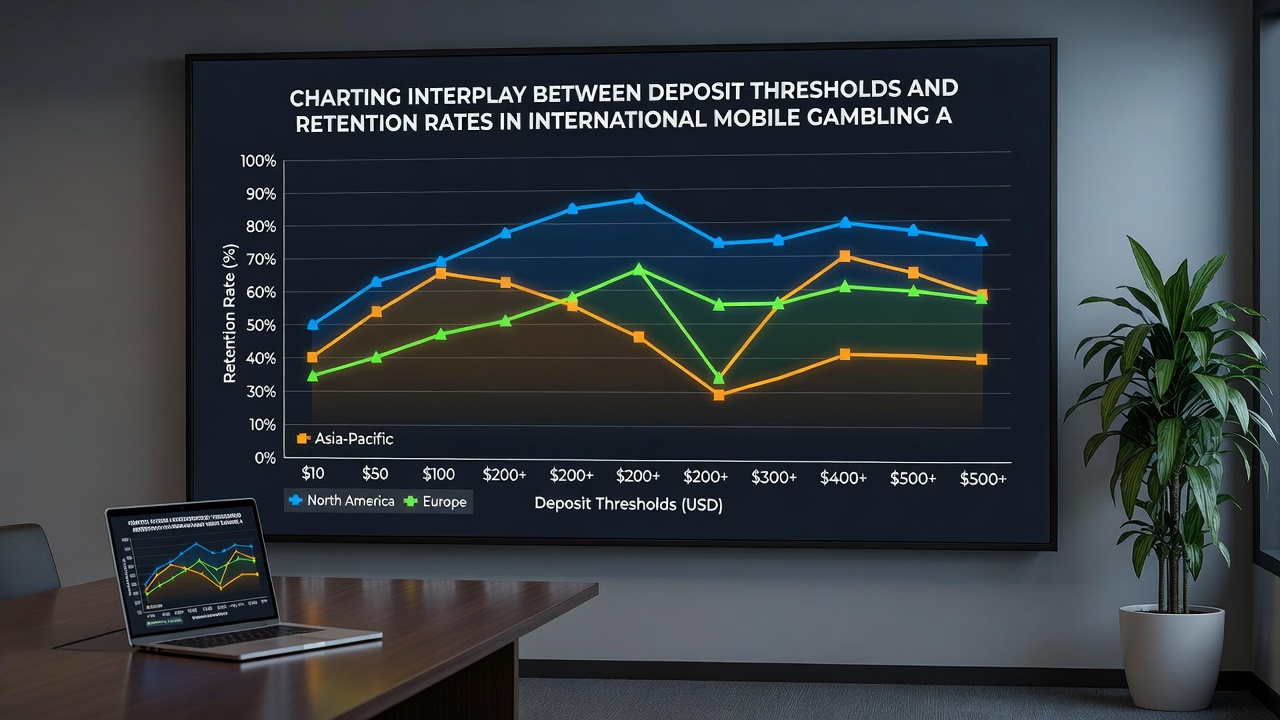
Regional regulatory updates scheduled for implementation around September 2026 are expected to introduce further standardization of threshold disclosure requirements, which may affect how operators communicate these limits to users at registration. Early modeling suggests that clearer threshold information at onboarding could support improved retention by reducing early-stage friction for players who understand spending boundaries from the outset.
Regional Variations in Threshold Policies and Outcomes
European operators outside the United Kingdom frequently apply tiered deposit systems that unlock higher limits only after extended play history, a structure associated with steadier retention in tracked cohorts. Australian state-based frameworks emphasize harm-minimization caps that reset daily or weekly, and data from those jurisdictions show retention patterns that stabilize when users perceive the limits as protective rather than restrictive. In parts of Asia and Latin America, where mobile-first markets dominate, lower minimum thresholds combined with rapid verification processes have supported quicker uptake and higher repeat-visit percentages according to aggregated operator reports.
Cross-border comparisons become complicated by differing tax treatments and advertising rules, yet consistent patterns emerge when analysts control for market maturity. Applications that align threshold structures with local income distributions and payment preferences record stronger retention metrics than those importing uniform global settings without adaptation.
Conclusion
Deposit thresholds and retention rates in international mobile gambling applications demonstrate measurable interdependence shaped by regulatory context, user demographics, and operational adjustments. Available evidence from multiple jurisdictions indicates that calibrated threshold policies, when paired with transparent communication and responsive scaling, correspond to more stable retention across varied player segments. As markets prepare for policy refinements expected by September 2026, continued monitoring of these variables will remain central to understanding long-term platform performance.